7 Vital Steps to Harvest Garlic Scapes
Garlic scapes curl skyward in mid-spring, forming tight loops that signal prime harvest time. These tender flower stalks emerge from hardneck garlic varieties 4-6 weeks before bulb maturity, offering a seasonal delicacy with a mild garlic flavor. Understanding the steps to harvest garlic scapes transforms what many gardeners discard into a valuable crop while redirecting the plant's energy toward robust bulb development.
Materials
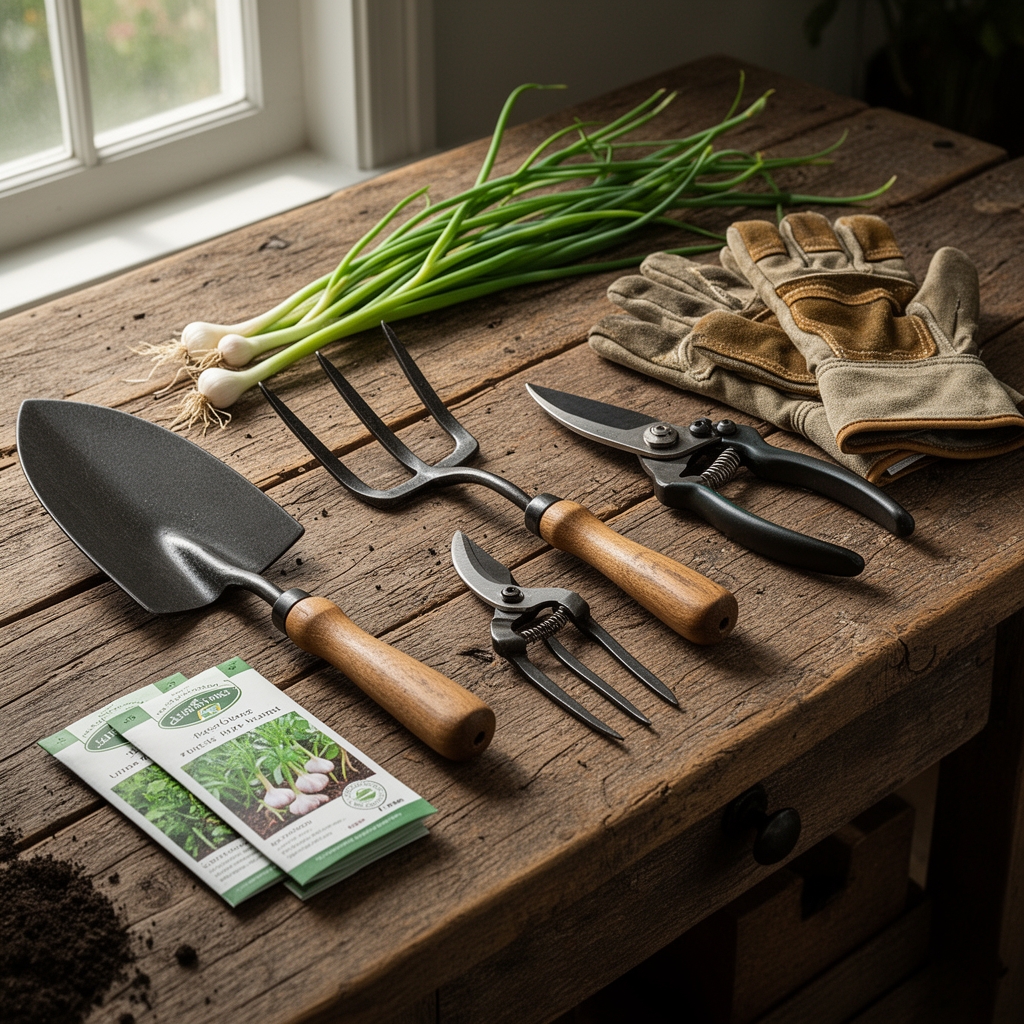
Harvesting garlic scapes requires minimal equipment but benefits from proper preparation. A sharp pair of bypass pruners or garden scissors ensures clean cuts that minimize tissue damage and pathogen entry points. Sterilize cutting tools with 70% isopropyl alcohol between plants to prevent the spread of white rot (Sclerotium cepivorum).
For optimal scape production, garlic plants require soil with pH 6.0-7.0 and moderate fertility. Apply a balanced organic fertilizer such as 4-4-4 feather meal blend at planting in fall, providing 2 pounds per 100 square feet. Supplement with kelp meal (1-0-2) in early spring to boost potassium levels, which strengthens cell walls and improves storage quality. The cation exchange capacity of amended soil should exceed 10 meq/100g to buffer nutrient availability throughout the growing season.
Collect harvested scapes in breathable mesh bags or baskets. Avoid plastic containers that trap moisture and accelerate deterioration. A harvest apron with pockets allows hands-free collection across larger plantings.
Timing
Scape emergence timing correlates directly with hardiness zones and varietal characteristics. In Zone 5, expect scapes to appear between late May and mid-June. Zone 6 gardeners typically see scapes in early to mid-May, while Zone 7 harvests occur from late April through early May.
Monitor plants when daytime temperatures consistently reach 65-75°F. Scapes develop rapidly once initiated, completing their curl in 7-10 days. Hardneck varieties such as 'Music', 'German Extra Hardy', and 'Chesnok Red' produce the most substantial scapes. Softneck varieties rarely form scapes and instead direct energy into producing multiple cloves.
The optimal harvest window spans 3-5 days after the scape completes one full curl but before the spathe swells significantly. At this stage, the scape remains tender throughout its length. Delayed harvest results in woody, fibrous tissue near the base as lignin deposition increases.
Phases
Identification Phase
Walk through garlic beds in mid-spring, scanning for the first emergence of central stalks. These appear as thick, round shoots rising from the plant's center, distinct from the flat leaf blades. Early identification prevents accidental scape maturation.
Pro-Tip: Mark the first plants showing scape emergence with colored flags. This creates a visual timeline for tracking developmental progression across different microclimates within your garden.
Cutting Phase
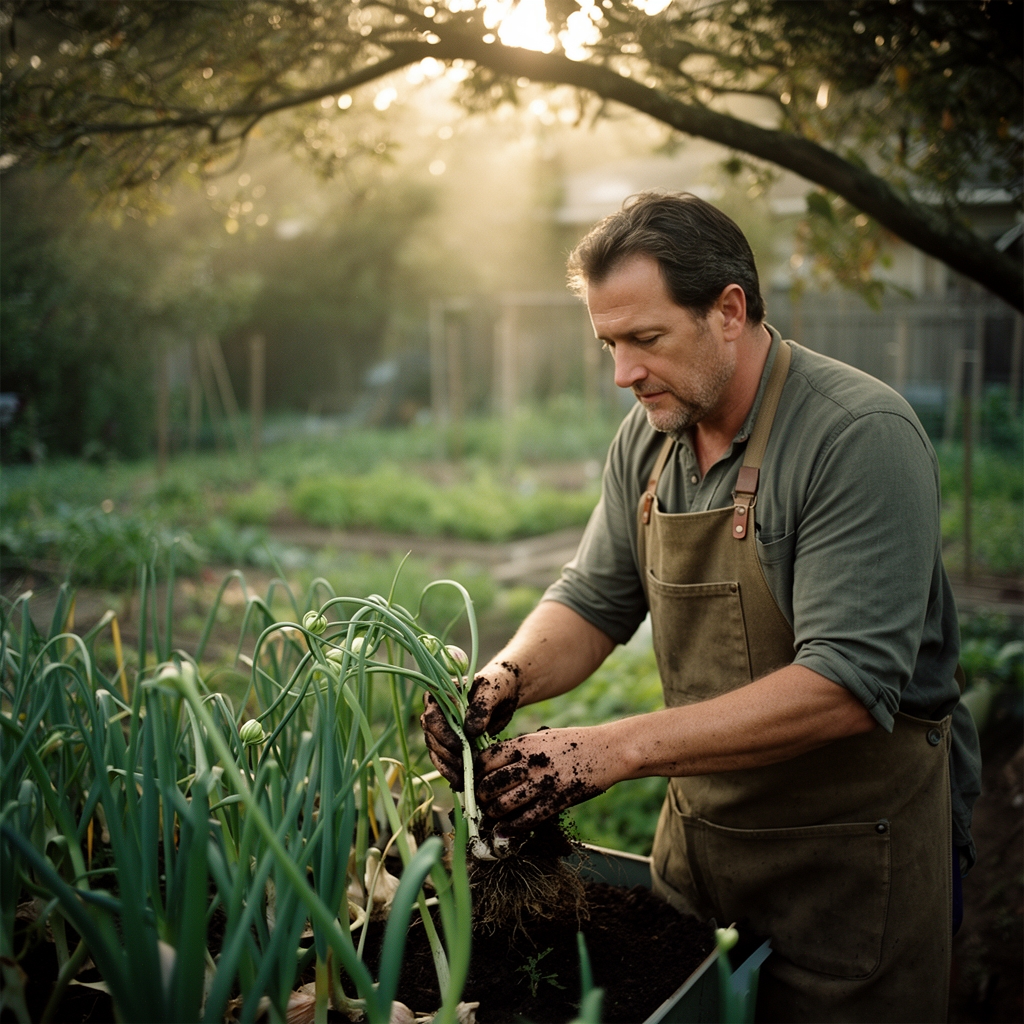
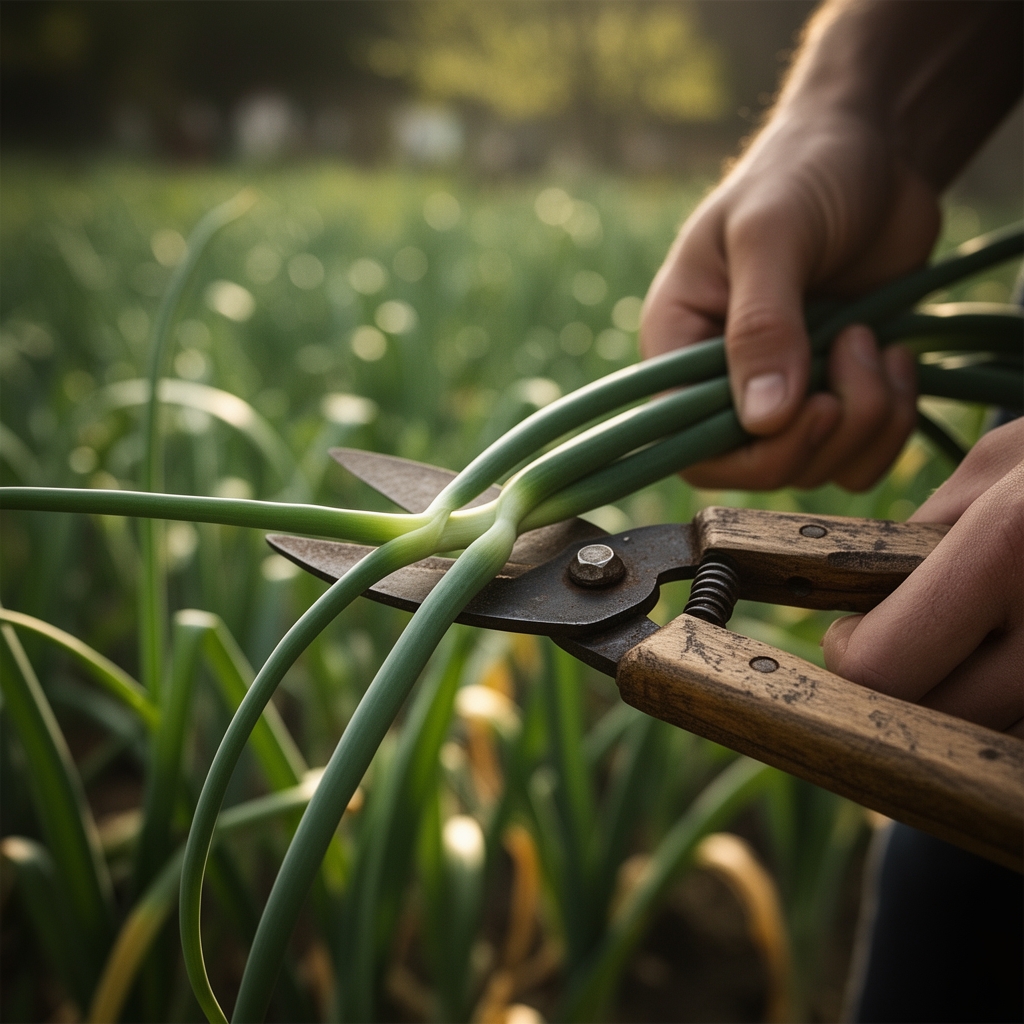
Grasp the scape 8-10 inches above the soil line where the stem remains tender. Position pruners at a 45-degree angle to create a slanted cut that sheds water. Avoid cutting into the pseudostem (the tightly wrapped leaf bases surrounding the scape), as this creates entry points for bacterial soft rot.
Remove the entire scape in one motion. Partial cuts or tearing damages vascular tissue and triggers excessive auxin distribution to lateral buds, potentially reducing bulb size. Some growers snap scapes by hand, but this method often leaves ragged ends that invite fungal colonization.
Pro-Tip: Harvest scapes during morning hours after dew evaporates but before peak heat. Midday harvesting when stomata are closed reduces plant stress and maintains scape crispness for culinary use.
Post-Harvest Phase
After removing all scapes from a planting, increase irrigation to compensate for the sudden loss of photosynthetic tissue. Apply 1.5 inches of water over the next week, delivered in two 0.75-inch applications. This supports rapid wound healing through increased transpiration pressure.
Monitor plants for signs of premature bulbing within 5-7 days post-harvest. Healthy plants redirect resources to bulb expansion, visible as slight swelling at the base and yellowing of the lowest leaves.
Pro-Tip: Inoculate garlic beds with endo-mycorrhizal fungi (Glomus species) immediately after scape harvest. The temporary reduction in carbohydrate production creates ideal conditions for fungal colonization, establishing beneficial relationships that enhance phosphorus uptake during critical bulb development.
Troubleshooting
Symptom: Scapes remain straight or form loose curls.
Solution: Insufficient vernalization. Garlic requires 4-8 weeks of temperatures below 40°F to initiate proper scape development. This indicates planting occurred too late in fall or spring temperatures rose too rapidly.
Symptom: Woody, fibrous scapes difficult to cut.
Solution: Harvest occurred too late after lignification began. Next season, mark calendar dates when first scapes appear and harvest all plants within 7 days.
Symptom: Brown, withered scape tips before harvest.
Solution: Botrytis leaf blight (Botrytis porri) infection. Improve air circulation by spacing plants 6 inches apart. Apply copper fungicide (30% copper octanoate) at first symptom appearance.
Symptom: Hollow or split scapes.
Solution: Boron deficiency. Apply 1 tablespoon borax dissolved in 1 gallon water per 100 square feet. Retest soil; optimal boron levels range from 0.5-1.0 ppm.
Symptom: Yellow streaking along scape length.
Solution: Onion yellow dwarf virus transmitted by aphids. Remove infected plants immediately. Control aphid populations with neem oil (0.9% azadirachtin) applied weekly.
Maintenance
Water garlic plants with 1 inch per week from scape emergence through 3 weeks before bulb harvest. Reduce irrigation to 0.5 inches during the final maturation period to prevent wrapper splitting. Drip irrigation delivers moisture directly to root zones while keeping foliage dry, reducing foliar disease pressure.
Apply a 2-inch layer of straw mulch after scape harvest to moderate soil temperatures and suppress weeds. Maintain mulch 2 inches away from plant bases to prevent crown rot.
Side-dress with fish emulsion (5-1-1) diluted to half-strength 10 days after scape removal. This provides readily available nitrogen to support bulb sizing without promoting excessive top growth.
FAQ
When exactly should I harvest garlic scapes?
Harvest when scapes form one complete 360-degree curl and the spathe (flower bud) remains tight and unopened, typically 4-6 weeks before bulb harvest.
Will removing scapes increase bulb size?
Yes. Research shows scape removal increases average bulb weight by 15-25% by redirecting carbohydrates from flower production to bulb development.
Can I eat the entire scape?
The top 8-12 inches remain tender. The bottom 2-3 inches near the pseudostem become fibrous and should be composted or reserved for stock.
How long do harvested scapes stay fresh?
Refrigerate unwashed scapes in breathable produce bags for 2-3 weeks. Blanch and freeze for 10-12 month storage.
Do all garlic varieties produce scapes?
Only hardneck varieties (Allium sativum var. ophioscorodon) produce harvestable scapes. Softneck varieties (var. sativum) rarely form flower stalks.