5 Quick Steps to Cut Lettuce Leaves
Harvesting lettuce at sunrise, when cell turgor pressure peaks and leaves snap cleanly from the crown, delivers crunchier texture than midday cuts. Following proven steps to cut lettuce leaves preserves the plant's ability to regenerate, extending harvest windows by four to six weeks in USDA Zones 4 through 9. The precise angle of each cut determines whether auxin distribution triggers new leaf primordia or invites bacterial soft rot into the vascular bundle.
Materials
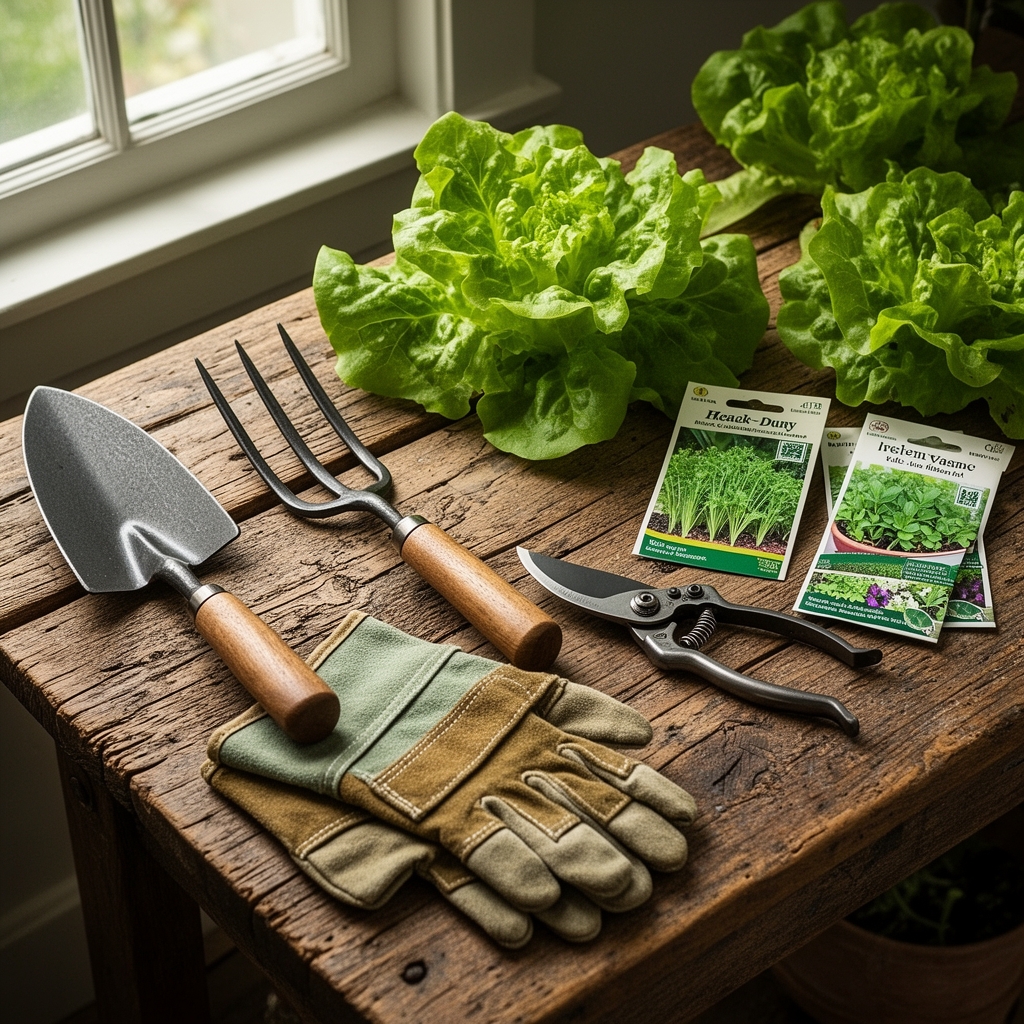
Sharp stainless-steel harvesting knife with 3-inch blade, sterilized in 10% bleach solution between plants to prevent Xanthomonas campestris transmission. Clean cotton gloves prevent oil transfer from hands to leaf cuticles. Basket lined with damp cotton cloth maintains 95% relative humidity during transport.
Soil amendments applied two weeks before first harvest improve leaf flavor compounds. Blood meal (12-0-0) at 2 pounds per 100 square feet boosts nitrogen availability in sandy loam substrates with pH 6.0 to 6.8. Kelp meal (1-0.5-2.5) supplies trace minerals, particularly boron and molybdenum, which enhance nitrate reductase enzyme function in leaf mesophyll cells. Mycorrhizal inoculant containing Rhizophagus irregularis colonizes roots within 14 days, improving phosphorus uptake by 40% according to trials at Cornell Agricultural Experiment Station.
Timing
Cool-season lettuce reaches optimal harvest maturity 45 to 70 days from seed, depending on cultivar and accumulated growing degree-days (base 40°F). In Zone 5, spring harvests begin May 10 through June 20. Fall crops planted August 1 produce until first hard freeze, typically October 15.
Leaf lettuce tolerates light frost to 28°F without cellular damage when hardened off gradually. Morning harvest between 6:00 and 8:00 a.m. captures maximum ascorbic acid content, which degrades 15% per hour under direct sun exposure above 75°F. Bolting initiates when 14-hour photoperiods combine with soil temperatures exceeding 70°F, triggering gibberellin synthesis in apical meristems.
Phases

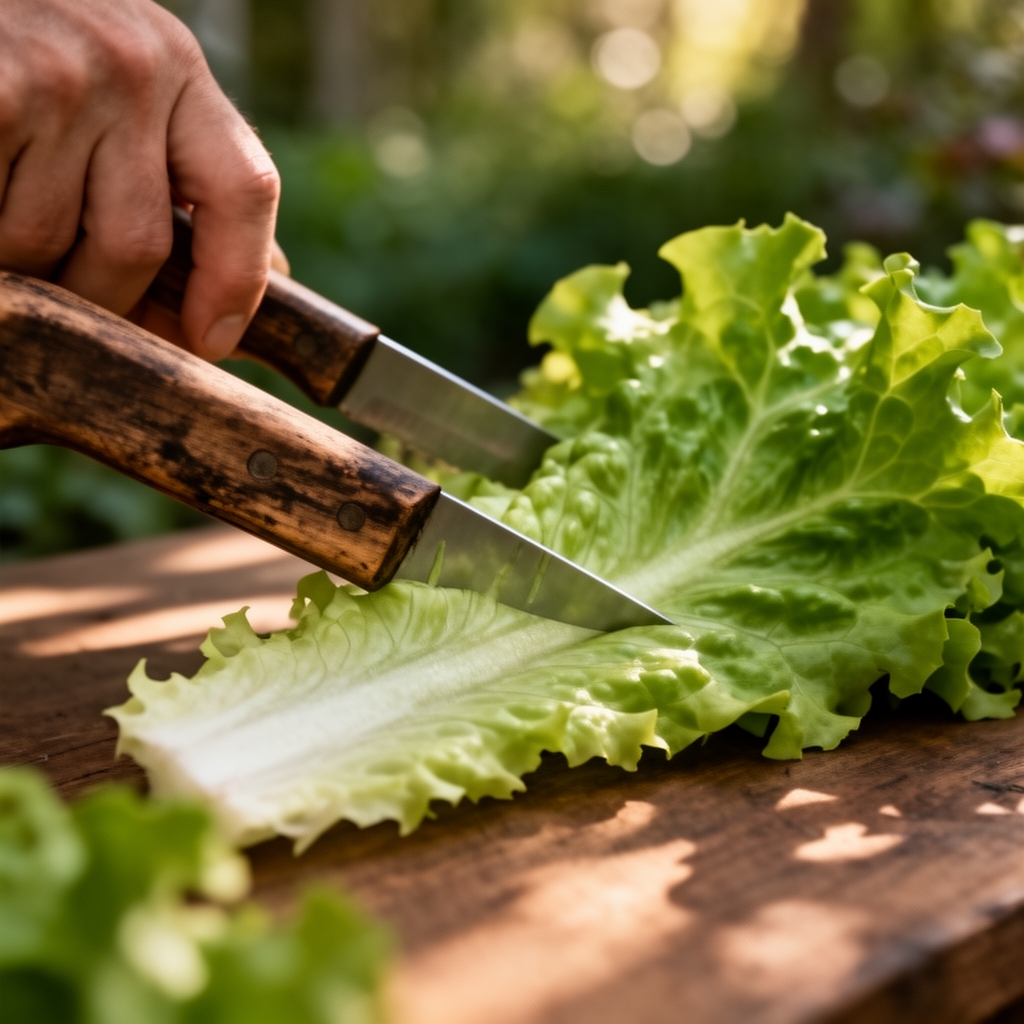
First Harvest (Thinning Phase): When seedlings reach 4 inches tall with four true leaves, cut every other plant at soil level. This thins the stand to 8-inch spacing while yielding tender baby greens. Use scissors held at 15-degree angle to crown, severing cleanly without crushing stem tissue.
Pro-Tip: Calcium chloride foliar spray (0.5% solution) applied 48 hours before cutting strengthens cell walls, reducing post-harvest wilting by 30%.
Cut-and-Come-Again Phase: Outer leaves measuring 6 to 8 inches long are ready for selective harvest. Position blade 1 inch above crown, cutting at 45-degree angle to shed moisture. Remove no more than one-third of total leaf mass per cutting to maintain photosynthetic capacity for regrowth.
Pro-Tip: Harvest progresses from outer to inner leaves in spiral pattern, following phyllotactic arrangement (137.5-degree divergence angle) to minimize auxin disruption in leaf axils.
Regeneration Phase: New leaves emerge from central growing point within 7 to 10 days when soil temperature remains between 60°F and 65°F. Cation exchange capacity above 10 meq/100g supports rapid cell division in leaf primordia. Apply fish emulsion (5-1-1) at half-strength immediately after cutting to replenish nitrogen depleted during protein synthesis.
Pro-Tip: Shadecloth (30% density) during July heat extends regeneration cycles by maintaining leaf temperature 8°F cooler than ambient air.
Troubleshooting
Symptom: Brown leaf edges with papery texture appearing 24 hours post-harvest.
Solution: Tipburn results from calcium deficiency during rapid growth. Maintain consistent soil moisture at 1 inch per week. Gypsum (calcium sulfate) at 5 pounds per 100 square feet corrects deficiency without altering pH.
Symptom: White latex sap oozing from cut stems.
Solution: Normal response in mature plants near bolting. Harvest earlier in day cycle when turgor pressure is lower. Plunge cut leaves immediately into 35°F water to halt enzymatic browning.
Symptom: Wilted leaves within one hour of cutting despite cool conditions.
Solution: Inadequate pre-harvest hydration. Irrigate deeply 12 hours before harvest to maximize cellular water potential (target -0.5 MPa).
Symptom: Aphid colonies on undersides of inner leaves.
Solution: Aphidius colemani parasitoid wasps introduced at 1 per square foot establish biological control within 14 days. Insecticidal soap (potassium salts of fatty acids at 2% concentration) provides immediate knockdown without residue.
Maintenance
Apply 1 inch of water weekly via drip irrigation to maintain soil moisture at field capacity. Soil probe inserted 4 inches deep should extract moist but not saturated substrate. Side-dress with composted chicken manure (3-2-2) at 1 pound per 10 row feet after second cutting.
Monitor crown for emerging seed stalks. Remove entire plant when stem elongates beyond 2 inches from base. Succession plantings seeded every 14 days ensure continuous harvest through growing season.
FAQ
How long until leaves regrow after cutting?
Seven to twelve days depending on temperature. Plants regenerate fastest when daytime highs remain between 60°F and 70°F with nighttime lows above 45°F.
Can I harvest in rain?
Avoid cutting wet foliage. Surface moisture promotes bacterial leaf spot (Pseudomonas cichorii). Wait until leaves dry completely, typically three hours after precipitation ends.
How many times can I harvest one plant?
Four to six cuttings over eight weeks under optimal conditions. Decline occurs when crown diameter shrinks below 2 inches or leaf regrowth slows beyond 14 days.
What causes bitter flavor?
Lactucarium production increases with heat stress and water deficit. Maintain consistent irrigation and harvest before midday temperatures exceed 75°F. Blanching outer leaves by tying them over crown for 48 hours reduces bitterness in summer crops.
Should I wash leaves before storage?
No. Excess moisture accelerates decay. Brush off soil particles with dry towel. Wash immediately before use, storing unwashed leaves in perforated bags at 32°F to 35°F.