8 Easy Ways How to Pull Fresh Carrots
Pulling a fresh carrot from cool, dark soil releases the scent of crushed greens and damp earth. The root snaps clean at the base, revealing smooth shoulders and a taper that ends in a fine point. Learning how to pull fresh carrots correctly preserves the root's integrity, prevents snapping, and ensures the crown separates cleanly from the taproot. Timing, soil moisture, and grip angle determine whether you extract a perfect specimen or leave half the root underground.
Materials
Begin with soil pH between 6.0 and 6.8. Carrots tolerate slight acidity but perform poorly above 7.2. Apply a balanced organic amendment at 4-4-4 NPK six weeks before sowing. Avoid fresh manure; excess nitrogen drives foliar growth at the expense of root diameter. Use aged compost at a rate of 2 cubic feet per 10 square feet to improve cation exchange capacity without pushing nitrogen above 40 ppm.
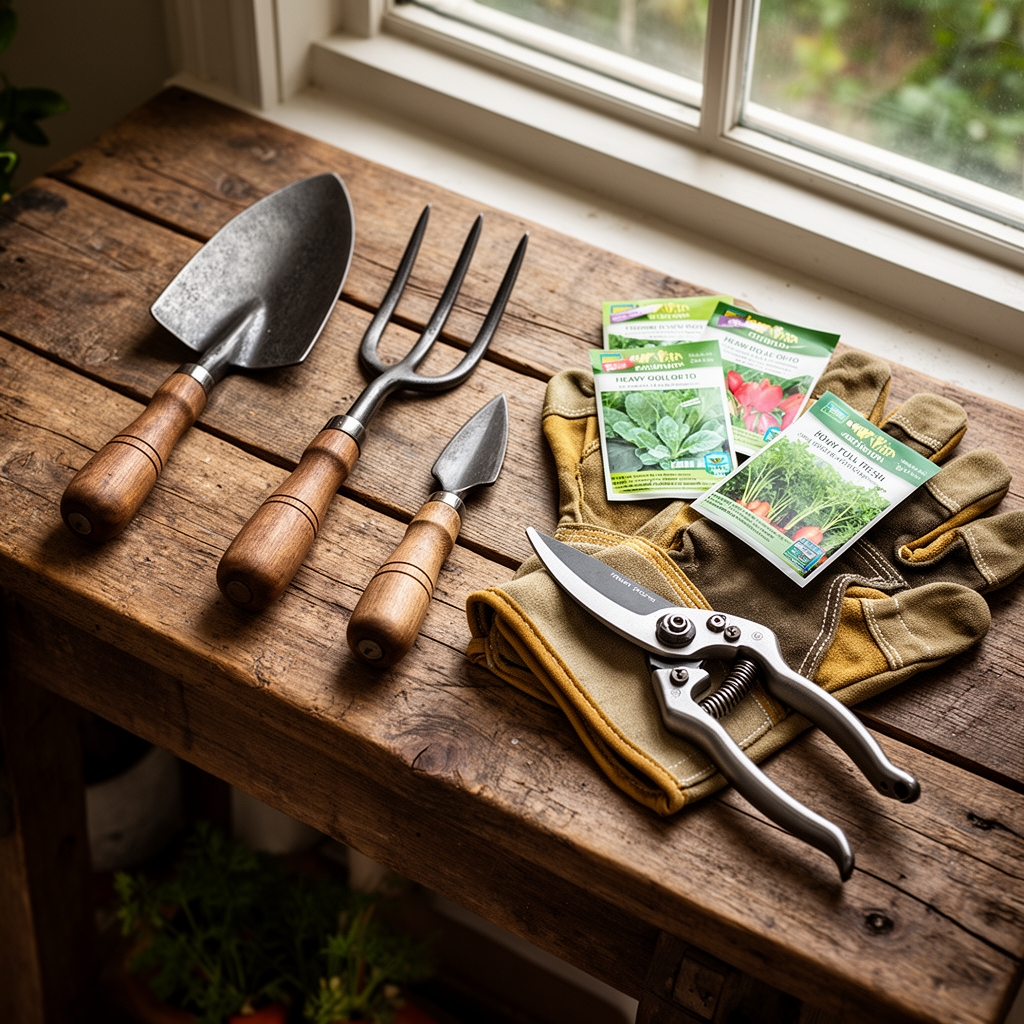
Prepare a garden fork with tines at least 10 inches long. A trowel works for shallow varieties, but standard Imperator and Danvers types demand deeper loosening. Keep a spray bottle of water and a pair of pruning shears nearby. A harvest basket lined with damp burlap maintains humidity and prevents surface cracking during transport.
Timing
In Hardiness Zones 3 through 5, sow carrots 2 to 3 weeks before the last spring frost. Harvest begins 60 to 80 days from germination, depending on variety. For fall crops in Zones 6 through 8, sow seed 10 weeks before the first frost date. Cool soil below 75°F encourages straight, uniform roots. Soil temperature below 50°F at harvest triggers sugar conversion; starches shift to sucrose and fructose, improving flavor.
In Zones 9 and 10, plant from October through February. High summer temperatures cause bitter flavor and split roots. Monitor soil moisture daily when daytime highs exceed 85°F.
Phases
Sowing: Scatter seed at 3 to 4 seeds per inch in rows spaced 12 inches apart. Cover with 1/4 inch of fine compost. Germination requires 7 to 14 days at 55 to 75°F. Thin seedlings to 2 inches apart when true leaves emerge. Remove weak seedlings by snipping at soil level to avoid disturbing neighbors.
Pro-Tip: Inoculate seed with mycorrhizal fungi at 1 gram per 100 row-feet. The symbiosis improves phosphorus uptake, particularly in soils with P below 25 ppm.
Establishing: Roots elongate rapidly between weeks 4 and 8. Side-dress with kelp meal at 1 tablespoon per linear foot when foliage reaches 6 inches. Potassium in kelp improves cell wall rigidity, reducing the incidence of forked roots. Maintain consistent moisture; fluctuations disrupt auxin distribution and cause radial cracking.
Pro-Tip: Mulch with 1 inch of straw once roots begin to swell. This moderates soil temperature and prevents green shoulders caused by light exposure.
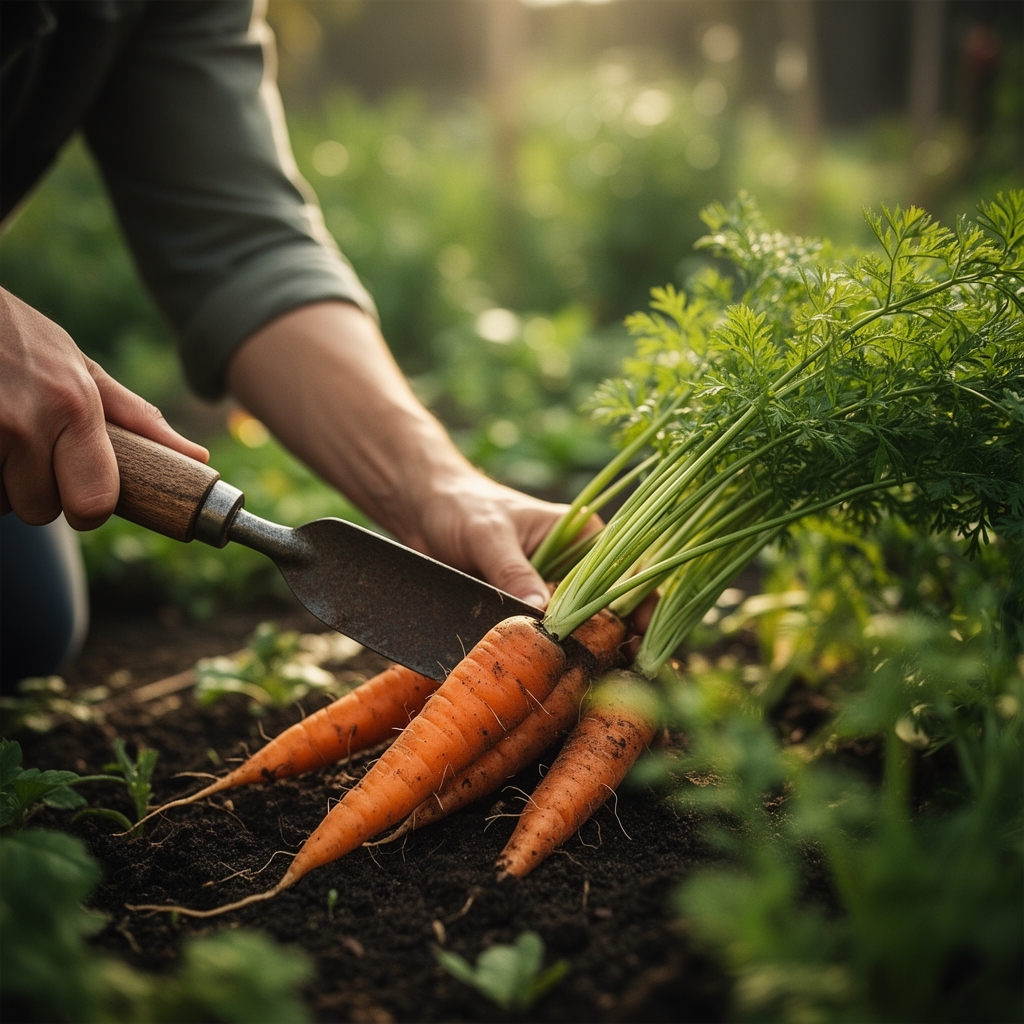
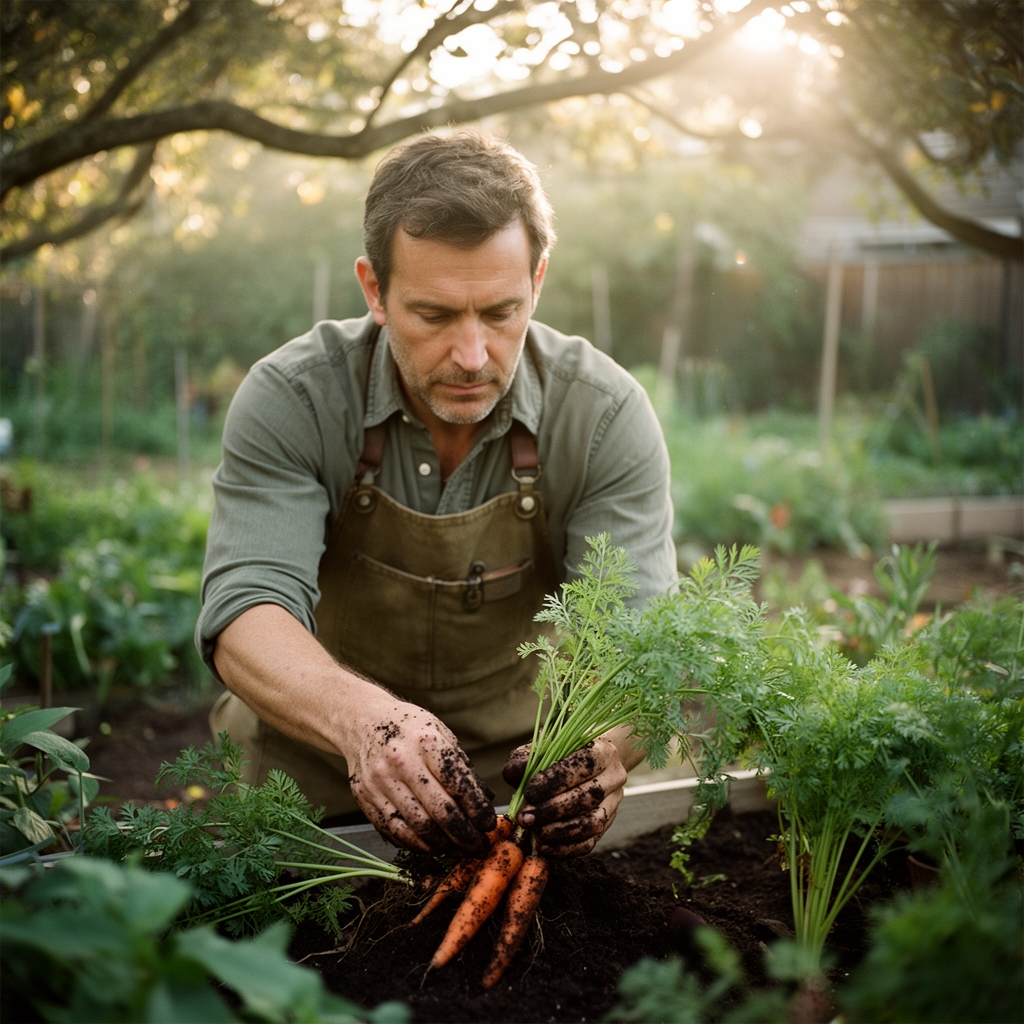
Harvesting: Water the bed 24 hours before harvest. Moist soil releases roots with minimal resistance. Insert a garden fork 4 inches from the row and lever gently to fracture compacted subsoil. Grip the crown where foliage meets the root. Pull straight up with steady pressure. Twisting or jerking snaps the taproot below the soil line.
Pro-Tip: Harvest in the morning when cells are turgid. Afternoon heat reduces moisture content by up to 8 percent, making roots brittle.
Troubleshooting
Symptom: Root splits lengthwise after pulling.
Solution: Irregular watering causes internal cells to expand faster than the epidermis. Provide 1 inch of water per week, delivered in two 0.5-inch applications.
Symptom: Forked or twisted roots.
Solution: Compacted soil or fresh organic matter forces roots to navigate obstructions. Loosen soil to 12 inches before planting. Use only fully decomposed compost.
Symptom: Carrot rust fly larvae tunnels.
Solution: Cover rows with insect netting from germination through harvest. Adults lay eggs at the soil line from May through September.
Symptom: Crown snaps when pulling.
Solution: Grasp foliage within 1 inch of the root shoulder. Holding higher on the greens transfers force to weak vascular tissue.
Maintenance
Apply 0.5 inches of water twice weekly during root development. Use drip irrigation or soaker hoses to keep foliage dry. Wet leaves encourage Alternaria leaf blight, which reduces photosynthetic capacity by 30 percent.
Weed by hand within 2 inches of the row. Hoes damage shallow feeder roots and disrupt mycorrhizal networks. Remove weeds when they reach 1 inch to prevent competition for nitrogen and water.
Monitor for aphids weekly. Populations above 10 per leaf tip excrete honeydew that fosters sooty mold. Spray with insecticidal soap at 2 tablespoons per quart of water.
FAQ
When are carrots ready to pull?
Harvest when roots reach the diameter specified on the seed packet, typically 0.75 to 1.5 inches. Taste-test one root; mature carrots snap cleanly and taste sweet.
Can I pull carrots from dry soil?
Dry soil clings to roots and increases breakage. Water 24 hours before harvest to a depth of 6 inches.
Do I need to loosen soil before pulling?
Yes. Use a garden fork to fracture compacted zones 4 inches from the row. This reduces pulling force by up to 60 percent.
How do I store fresh-pulled carrots?
Trim tops to 0.5 inches. Brush off loose soil but do not wash. Store in perforated bags at 32 to 40°F with 95 percent humidity.
Why do my carrots break during harvest?
Roots break when soil is too dry, grip point is too high on the foliage, or the variety has a fragile core. Adjust moisture and hand position.